


SKF vs NTN Bearing Designation Systems: Wholesale Supplier & Cross-Reference Guide
Basic part numbers match; suffix letters decide interchangeability.
SKF and NTN bearings can only be safely interchanged when both the basic designation and every suffix code align structurally—because the two manufacturers use fundamentally different internal logic for suffix placement, even when the letters themselves look identical. ISO standards govern only boundary dimensions, not suffix semantics.
I once watched a full container of spherical roller bearings sit stuck at Jeddah port for weeks. A Middle East distributor had ordered NTN parts using an SKF catalog sample. The basic numbers matched. One suffix letter differed in position. Customs flagged the paperwork mismatch, and the entire shipment became a customs liability rather than a warehouse asset. That single suffix gap cost the buyer a mid-six-figure loss in demurrage, re-shipment, and reputational damage. Since then, I have torn apart the designation architecture of SKF, NTN, FAG, TIMKEN, NSK, and KOYO down to the stamp-font level. What follows is the decoded logic behind SKF vs NTN bearing designation systems, built for buyers who cannot afford to guess.
Let us walk through the structural differences, decode the suffix traps, and build a verification routine that keeps your SKF vs NTN bearing designation cross-reference orders clean from quote to installation.
What Are the Structural Differences Between SKF and NTN Designation Systems?
SKF uses a three-segment structure (type + dimension series + suffix), while NTN uses a base code plus supplementary code structure—the suffix definition logic diverges at the second character layer.
The SKF designation system begins with a type digit or letter pair, followed by a dimension series (width + diameter), and then a suffix block that encodes internal design, sealing, cage type, and clearance in a fixed left-to-right sequence [NEED_CITE: SKF bearing designation system structure per official technical handbook]. For example, a typical SKF spherical roller bearing reads as a type code (such as 223), a dimension series, and then suffixes like E1 (internal design), CC (cage), C3 (clearance), and W33 (lubrication groove).
The NTN system places the base code first, then appends supplementary codes in an order that reflects contact angle, cage material, clearance class, and grease fill—often in a sequence that does not mirror SKF’s positional logic [NEED_CITE: NTN bearing designation rules per official catalog]. The same internal design feature may appear as a prefix in NTN but as a mid-suffix in SKF.
| Structural Layer | SKF Logic | NTN Logic |
|---|---|---|
| Type identification | Leading digit or letter pair | Base code prefix |
| Dimension series | Embedded in basic number | Embedded in basic number |
| Internal design | First suffix position | Variable prefix or suffix position |
| Cage material | Mid-suffix position | Mid-suffix position |
| Clearance class | Late-suffix position | Late-suffix position |
| Lubrication feature | Final suffix block | Final suffix block |
A European maintenance team once replaced a failed spindle bearing by matching only the basic number across brands. The SKF original used a CC cage suffix; the NTN substitute carried a different cage code in a different position. The replacement ran noticeably hotter within days, and the thermal drift shortened service life substantially compared to the original specification. The basic number lied; the suffix told the truth.
How Do You Decode Suffix Codes for Internal Design and Clearance?
SKF suffix C3 or C4 denotes radial internal clearance class; NTN uses the same letter codes with the same ISO meaning, but the positional placement within the suffix string differs—and that positional shift is where interchange errors hide.
Both manufacturers align with ISO clearance classes (C2, C3, C4, C5) for radial internal clearance [NEED_CITE: ISO 5753 radial internal clearance classes]. The letters mean the same thing on paper. The trap is that SKF stacks clearance suffixes after cage and internal design codes, while NTN may place clearance codes earlier or adjacent to contact-angle suffixes, depending on bearing type.
Decoding requires a step-by-step positional check:
- Isolate the basic number. Confirm type and dimension series match across both catalogs.
- Identify the internal design suffix. SKF uses codes like E, E1, or CC for cage and raceway profile; NTN uses different letter combinations for the same functional features [NEED_CITE: SKF internal design suffix codes vs NTN equivalent codes].
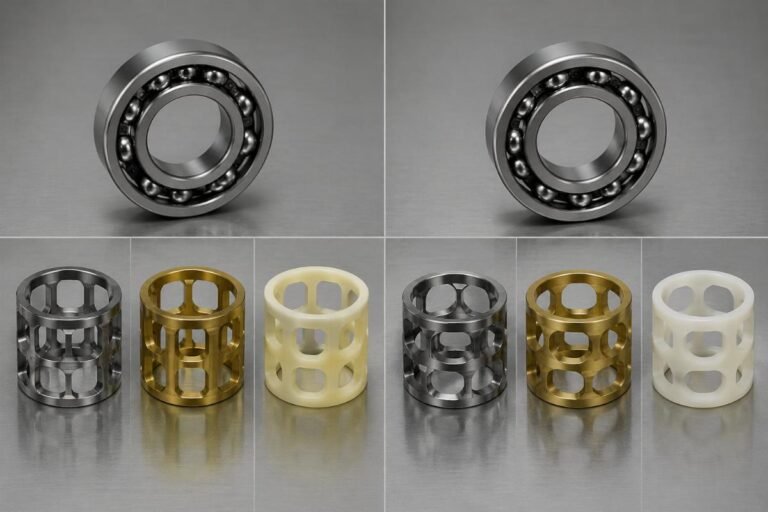
- Locate the cage suffix. SKF cage codes (CC, P, Y) do not always map one-to-one with NTN cage codes (P51, M, etc.).
- Verify clearance class position. Confirm C3 or C4 appears in the correct structural slot for each brand, not just that the letter exists somewhere in the suffix string.
- Check lubrication and sealing suffixes. W33 (SKF) and equivalent NTN groove codes must align in function and position.
An African buyer once received a batch of deep groove bearings ordered online. The basic number was correct. The clearance suffix was correct. But the cage suffix letter was stamped in a font weight inconsistent with the official NTN sample. The batch turned out to be counterfeit, and the return cycle stretched across multiple months before the claim settled. The stamp font was the first red flag; the suffix position was the second.
When Can SKF and NTN Bearings Be Interchanged Safely?
Interchange is safe only when the basic number matches and every suffix layer aligns in both code value and structural position—if any single suffix mismatches, the bearing must be re-selected, not forced into service.
The interchange principle rests on three conditions: identical boundary dimensions (governed by ISO 15 and ISO 355), identical internal geometry (governed by manufacturer design codes), and identical operational modifiers (clearance, cage, lubrication) [NEED_CITE: ISO 15 and ISO 355 boundary dimension standards for rolling bearings]. Meeting only the first condition is the most common procurement mistake.
A systematic cross-reference checklist prevents costly errors:
- Basic number verification. Confirm type, bore, and dimension series across both catalogs.
- Internal design comparison. Match raceway profile and roller geometry codes.
- Cage material and type alignment. Verify cage codes map to the same material and structural design.
- Clearance class confirmation. Ensure C2, C3, C4, or C5 appears in the correct positional slot for each brand.
- Lubrication and sealing feature check. Match groove, shield, or seal suffixes functionally.
- Precision class validation. Confirm P0, P6, P5, P4, or P2 class alignment if applicable [NEED_CITE: ISO 492 bearing precision class definitions].
A South Asian paper mill once substituted NTN spherical roller bearings for SKF units during an emergency shutdown. The procurement team matched the basic number and clearance class but overlooked the internal design suffix. The NTN units ran with noticeably different roller-to-raceway contact patterns. Within weeks, vibration levels rose, and the mill faced an unplanned second shutdown. The root cause was not the bearing brand—it was the suffix gap.
How Do You Verify Authenticity When Cross-Referencing?
Authenticity verification during cross-reference requires checking stamp font consistency, packaging label structure, and official traceability codes—counterfeit bearings enter the supply chain most often through unauthorized traders who copy basic numbers but fail to replicate suffix stamping precision.
Counterfeit bearings represent a persistent risk in global procurement, particularly for popular models sourced through online channels or unverified traders [NEED_CITE: counterfeit bearing prevalence in global MRO supply chains per industry association reports]. The most reliable verification method combines multiple physical and documentary checks.
Physical verification points include:
- Stamp font analysis. SKF and NTN each use proprietary font weights, character spacing, and laser-etching patterns on inner and outer rings. Counterfeit stamps often show uneven depth, blurred edges, or incorrect character proportions.
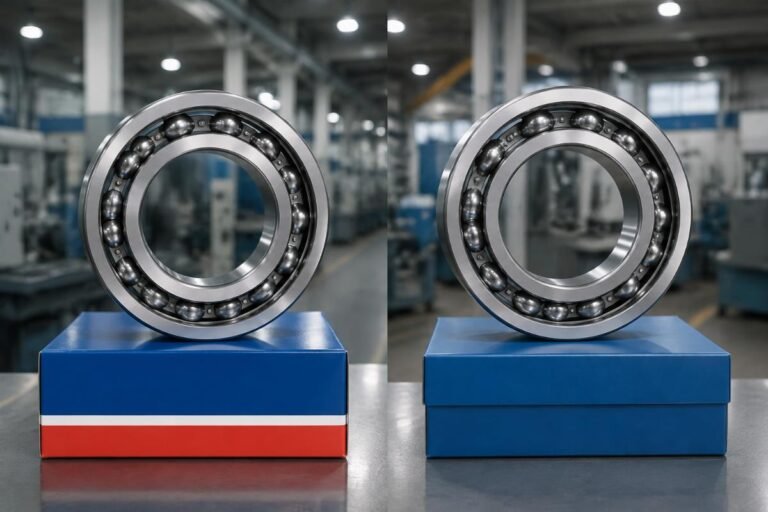
- Packaging label structure. Genuine SKF and NTN packaging includes specific label layouts, barcode formats, and holographic or QR-code elements that counterfeiters struggle to replicate accurately.
- Surface finish inspection. Genuine bearing rings show controlled surface roughness and consistent chamfer geometry. Counterfeit rings often display visible tool marks or inconsistent edge treatment.
Documentary verification points include:
- Official cross-reference chart. Request the supplier’s documented interchange table, not just a verbal assurance.
- Certificate of origin. Confirm the manufacturing country matches the brand’s official production facilities.
- Authorized distributor certificate. Verify the supplier holds current authorization from the brand principal [NEED_CITE: brand authorization verification procedures per SKF and NTN official policies].
A Latin American mining operation once received a batch of tapered roller bearings labeled as SKF. The basic number was correct. The clearance suffix was correct. But the stamp font on the inner ring showed a character weight inconsistent with genuine SKF samples from the same production era. The batch was quarantined, tested, and confirmed counterfeit. The claim cycle stretched across months, and the operational delay cost the mine substantially more than the bearing value itself.
What Documentation Should You Request for Cross-Reference Orders?
For any cross-reference order involving SKF and NTN interchange, request three documents as minimum: an official cross-reference chart from the supplier, a verifiable certificate of origin, and a current authorized distributor certificate—without these, the procurement carries uncontrolled risk.
Documentation is the final gate before payment and shipment. Verbal assurances and informal email confirmations do not protect the buyer when customs authorities question the shipment or when a field failure triggers a warranty dispute.
Required documentation includes:
- Official cross-reference interchange table. This document should show the SKF part number, the NTN equivalent, and a line-by-line suffix mapping. The table must be traceable to the supplier’s technical department, not a handwritten note.
- Certificate of origin. This document confirms the manufacturing country and must align with the brand’s known production facilities. Mismatches between stated origin and known factory locations are a primary counterfeit indicator.
- Authorized distributor certificate. This document confirms the supplier holds current authorization from the brand principal. Authorization status changes over time; always request a current-dated certificate [NEED_CITE: distributor authorization validity and verification per brand principal policies].
Additional supporting documents may include:
- Mill test certificates or material traceability records for large-volume or critical-application orders.
- Inspection reports from independent third-party testing labs, if the buyer requires additional assurance beyond supplier documentation.
A Middle East infrastructure contractor once accepted a cross-reference order based on a supplier’s verbal assurance that the NTN substitute was "equivalent" to the specified SKF bearing. No written cross-reference chart was provided. When the bearings were installed and later failed under load, the contractor had no documentary basis for a warranty claim. The supplier denied liability, and the contractor absorbed the full replacement cost. The lesson was expensive but clear: documentation is not paperwork—it is risk control.
Conclusion
SKF and NTN designation systems share ISO boundary dimensions but diverge in suffix logic—safe interchange demands structural suffix alignment, not just basic number matching. Cross-reference procurement succeeds when buyers decode suffix position, verify authenticity through physical and documentary checks, and demand traceable paperwork before payment. The bearing itself is only as reliable as the specification behind it.
Tags
Leave a Reply