

SKF vs NTN Bearing Radial Clearance Standards: Cross-Reference Wholesale Supplier
C3 is not C3 when you cross brands.
SKF and NTN both use C3 to denote above-normal radial internal clearance, but their actual micrometer ranges do not fully overlap. A buyer who orders NTN CM assuming it equals SKF C3 will often end up with a tighter internal fit than the machine was designed for—leading to thermal lock-up, vibration spikes, or premature cage wear within months of installation.
I still remember a Dubai distributor who called me furious after a batch of 6206-2Z bearings seized on a conveyor line. He had ordered them marked "C3" based on an old SKF catalog, but the original equipment drawing actually specified NTN’s CM clearance code. When I pulled both tables side by side, the upper and lower limits were visibly misaligned. That single misread cost his client a full line shutdown and a mid-five-figure replacement bill. Since then, every cross-brand inquiry I handle starts with one question: send me the original OEM drawing with the exact clearance suffix.
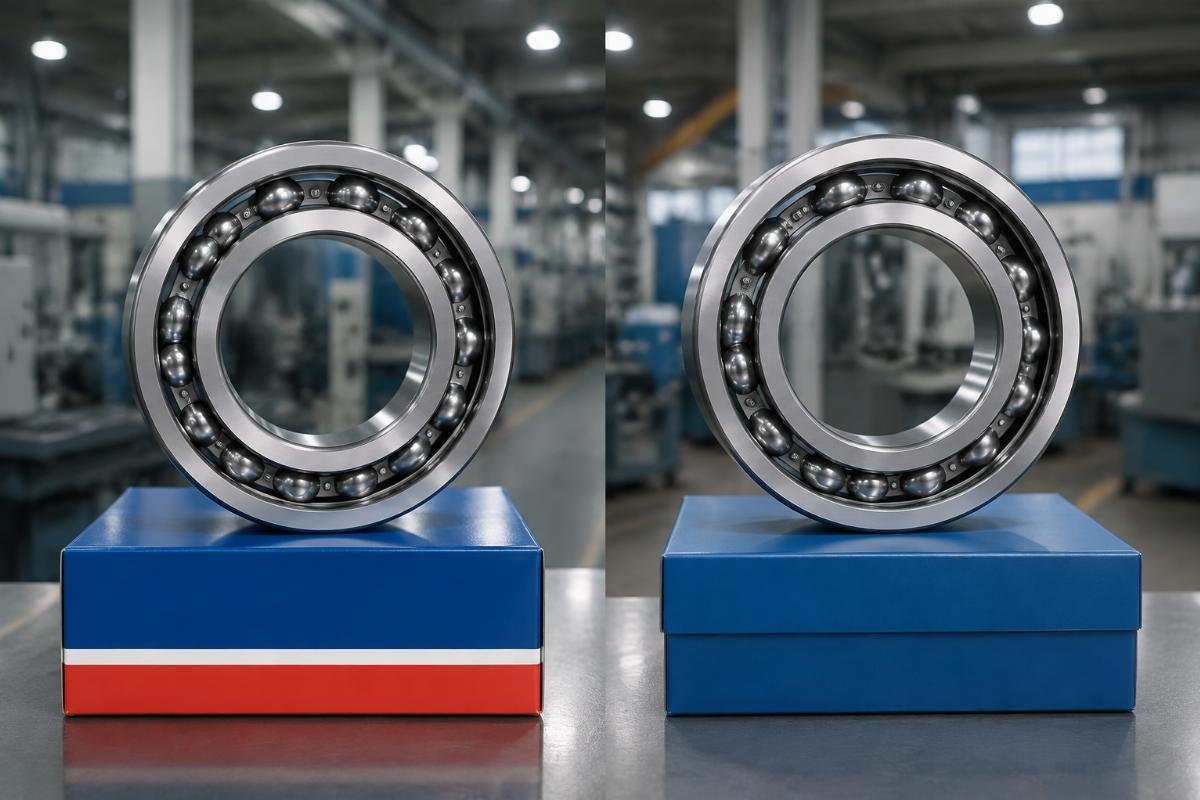
Let me walk you through how the two systems actually differ, how to cross-reference them without guessing, and what mistakes keep showing up in the field.
What Is Radial Internal Clearance and Why Does It Matter?
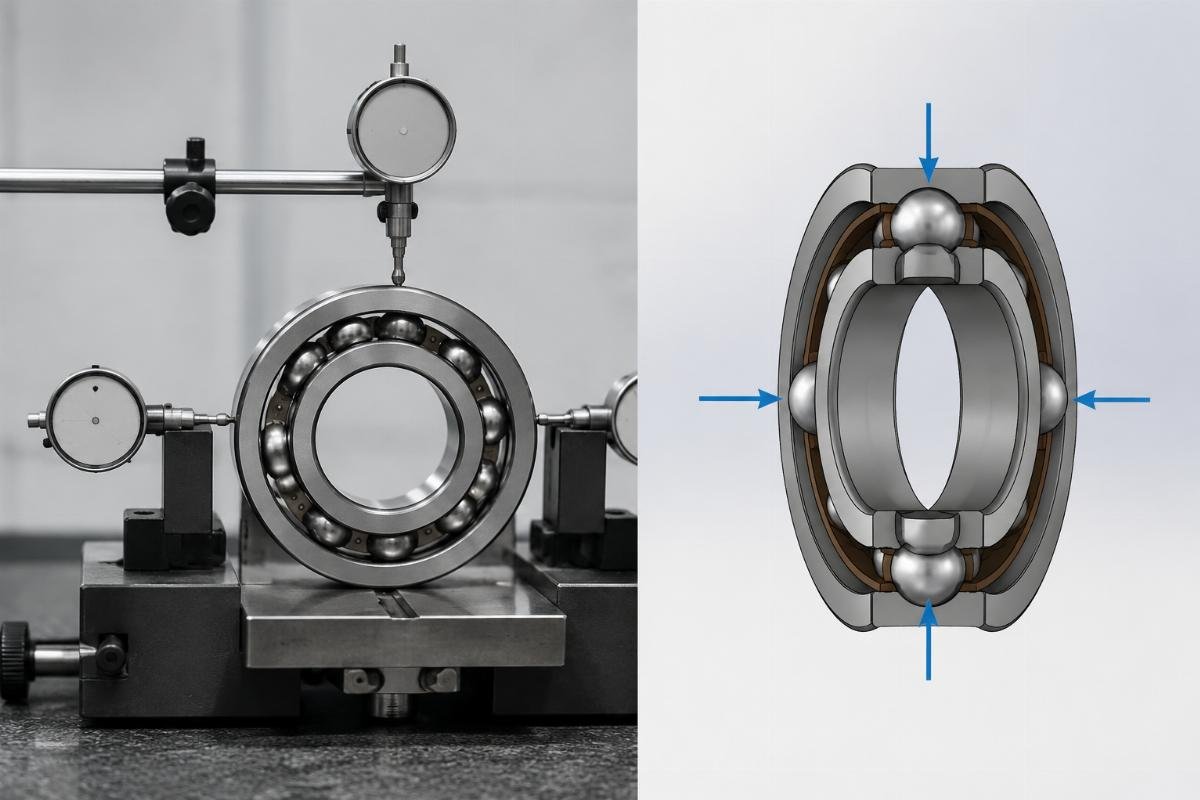
Radial internal clearance is the total distance a bearing’s inner ring can move radially relative to its outer ring before any rolling element contacts both rings simultaneously.
This single value controls how the bearing behaves once it reaches operating temperature. Too tight, and thermal expansion of the inner ring (which is usually press-fitted onto a hot shaft) eliminates the clearance entirely, causing the rolling elements to wedge and generating massive friction heat. Too loose, and the rolling elements skid instead of rolling cleanly, which wears the cage pockets and triggers vibration that can exceed ISO 10816 alarm thresholds [NEED_CITE: ISO 10816 vibration severity zones for rotating machinery].
The measurement itself follows ISO 5753, which defines how to apply a defined measuring load and record the displacement [NEED_CITE: ISO 5753 measurement method for radial internal clearance]. Both SKF and NTN publish their clearance groups—C2 (tight), CN (standard), C3, C4, C5 (loose)—in their general catalogues, and both state that the values apply to unmounted bearings at room temperature.
Here is where most buyers stop reading. They assume the catalogue number on the box is the whole story. It is not. The actual micrometer band behind each code shifts slightly between manufacturers, and the shift is largest in the C3 and C4 ranges—the exact codes most commonly ordered for electric motors, gearboxes, and conveyors.
How Do SKF and NTN Label Radial Clearance Differently?
SKF uses the classic C2–C5 ladder plus CN for standard; NTN uses the same C-series but adds a separate CM code for "motor clearance," which sits between CN and C3 and has no direct SKF equivalent.
This is the single biggest source of cross-brand confusion. NTN created CM specifically for electric motor applications where a slightly looser-than-standard clearance is needed to absorb thermal growth without going all the way to C3. SKF, by contrast, typically recommends CN for standard motors and C3 only when the application involves elevated temperatures or interference fits on both rings [NEED_CITE: SKF general bearing catalogue internal clearance selection chapter].
The table below shows the qualitative positioning of the most commonly confused codes. Exact micrometer values vary by bore diameter series, so always check the specific size range in the manufacturer’s current catalogue.
| Clearance Code | Manufacturer | Position vs Standard CN | Typical Application Zone |
|---|---|---|---|
| CN | SKF | Standard baseline | General industrial, moderate temperature |
| CN | NTN | Standard baseline | General industrial, moderate temperature |
| CM | NTN | Slightly above CN, below C3 | Electric motors, low-noise requirement |
| C3 | SKF | Noticeably above CN | Hot shafts, interference fits, conveyors |
| C3 | NTN | Noticeably above CN, but upper limit differs from SKF C3 | Similar to SKF C3, not identical |
| C4 | SKF | Well above C3 | High-temperature kilns, dryers |
Notice that NTN’s CM has no SKF counterpart. If a machine was originally built with NTN 6305CM and you substitute SKF 6305C3, you are moving the clearance band noticeably higher than the OEM intended. The result is often a noisier running bearing and, in high-speed motors, cage wear that shows up as a sudden vibration increase after a few thousand hours [NEED_CITE: bearing failure mode atlas per ISO 15243].
A European pump manufacturer once told me they switched from NTN to SKF on a motor line and specified C3 across the board "to be safe." Within months, their end-of-line test rig was rejecting units for excessive noise. The root cause was not the bearing quality—it was that C3 was simply too loose for their fit and speed combination. They went back to ordering NTN CM through a cross-reference supplier who could verify the exact band before shipping.
Step-by-Step: How to Cross-Reference SKF and NTN Clearance Codes
Never translate a clearance code by memory. Always go back to three sources: the original OEM drawing, the current manufacturer’s catalogue for the exact bore size, and a verified cross-reference chart.
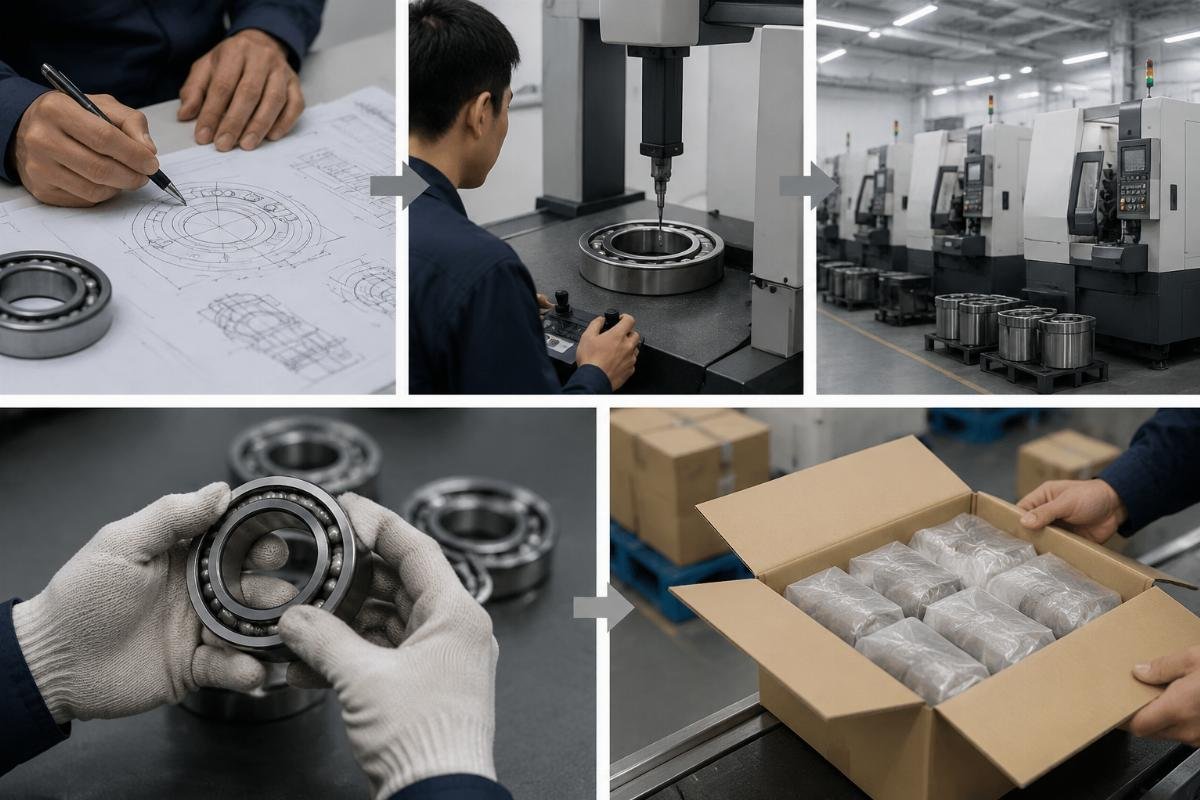
The process I follow on every cross-brand inquiry breaks down into five steps. Each step is designed to catch the exact type of mismatch that caused the Dubai seizure I mentioned earlier.
-
Pull the original OEM part number and clearance suffix. Do not rely on what the previous buyer wrote on the purchase order. Ask for the maintenance log or the nameplate photo. The suffix on the bearing currently installed may have been changed by a previous technician who grabbed whatever was in stock.
-
Identify the manufacturer of the original bearing. The suffix CM only exists in NTN’s system. If the OEM drawing says CM, you are dealing with an NTN-origin design. If it says C3, confirm whether the drawing references SKF or NTN as the source brand.
-
Open the current catalogue for the exact bore and outer diameter series. Clearance bands shift with size. A 6206 C3 range is not the same as a 6308 C3 range, even within the same brand. Look up the specific micrometer band for the size in question [NEED_CITE: SKF and NTN current general catalogue radial clearance tables for deep groove ball bearings].
-
Compare the micrometer bands, not just the code letters. If the original NTN CM band for a 6206 size runs, for example, from a lower value to an upper value, and the SKF C3 band for the same size starts noticeably higher, you have a mismatch. Document both bands side by side.
-
Confirm the fit and operating temperature with the end user. Ask for the shaft and housing fit tolerances, the expected operating temperature, and whether the application involves any axial preload. A bearing that runs cool with a loose fit may need standard clearance; the same bearing on a hot shaft with an interference fit may genuinely need C3 or even C4.
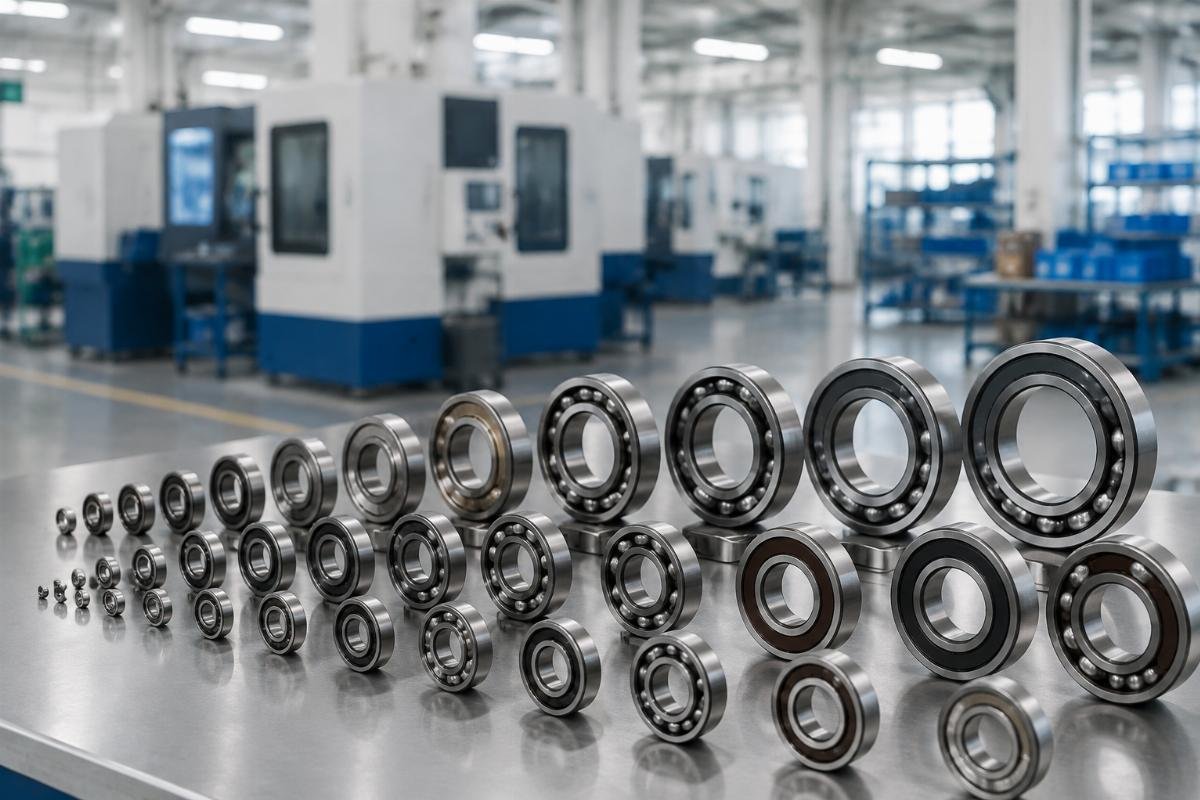
I keep a consolidated cross-reference table covering SKF, NSK, FAG, TIMKEN, NTN, and KOYO on hand for exactly this reason. When a Southeast Asian maintenance station recently asked for 6206 clearance options across two brands, I was able to send them a matched pair with both micrometer bands highlighted. They placed the order the same day and reported zero field issues on installation.
Common Mistakes Buyers Make When Swapping Brands
The majority of cross-brand bearing failures I investigate trace back to one of three clearance errors: assuming C3 equals C3, ignoring the CM code, or selecting a larger clearance "for safety" without checking the fit.
Let me break down the three patterns I see most often.
Mistake one: treating C3 as a universal code. A Middle East steel mill replaced a batch of conveyor idler bearings and ordered SKF C3 to match what they thought was the original NTN C3 spec. The actual micrometer bands did not fully overlap for that bore size. The SKF bearings ran noticeably hotter than the NTN units they replaced, and within a few months the grease was breaking down and the bearings were failing. The mill lost an entire production shift to unplanned downtime—costing several times what the bearing price difference would have been.
Mistake two: ignoring the CM code entirely. This is the most common error on electric motor replacements. A factory in South America was replacing motor bearings and the maintenance supervisor, unfamiliar with NTN’s system, simply ordered SKF C3 because "C3 is the next step up from standard." The motors ran with vibration levels that exceeded their baseline by a wide margin. The root cause was that CM was the correct original code, and jumping to C3 introduced enough looseness to let the rolling elements skid at operating speed.
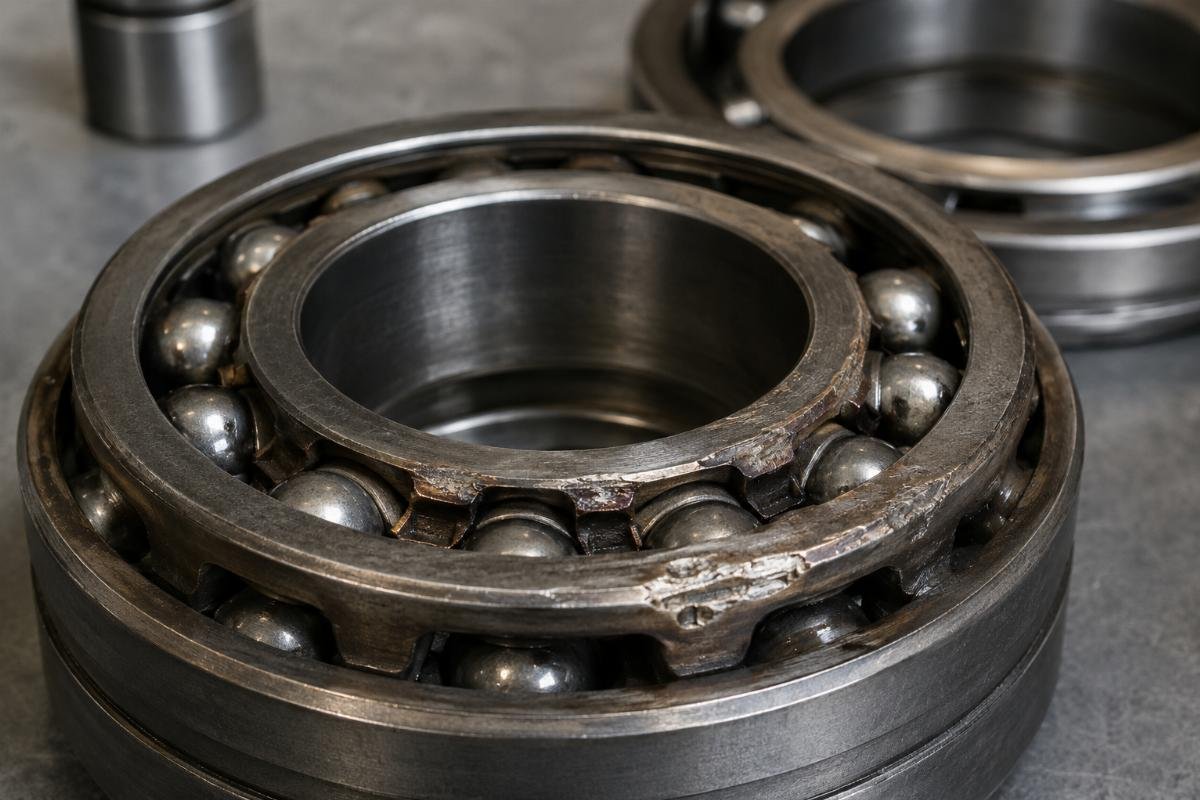
Mistake three: oversizing clearance "to be safe." It is a widespread belief that larger clearance always means better heat dissipation. In reality, excessive clearance causes the rolling elements to skid through the load zone instead of rolling cleanly. This skidding wears the cage pockets, generates its own heat, and can trigger false alarms on condition monitoring systems [NEED_CITE: bearing skidding failure mechanisms in low-load high-speed conditions]. I have seen gearboxes where someone specified C4 when C3 would have been correct, and the gearbox oil analysis showed elevated cage material within hours of start-up.
The fix in every case was the same: go back to the OEM drawing, confirm the original clearance code and brand, and match the micrometer band—not just the letter—before ordering.
How to Request the Right Clearance When Sourcing Globally
Always send the supplier three pieces of information: the original OEM bearing code with suffix, the shaft and housing fit tolerances, and the expected operating temperature range.
This sounds basic, but in my experience fewer than half of cross-brand inquiries include all three. Most buyers just send a part number and ask for a quote. That is fine if you are reordering the exact same brand and code. It is a recipe for disaster if you are switching brands.
Here is how I structure the request on every international inquiry I handle:
-
Original part number and clearance suffix. Copy it exactly from the nameplate or the maintenance record. If the suffix is CM, flag it explicitly—many general trading companies do not recognize the code and will default to C3.
-
Fit tolerances. Shaft fit (e.g., k5, m5, j6) and housing fit (e.g., H7, G7). These determine how much the internal clearance changes once the bearing is mounted. An interference fit on the inner ring reduces clearance; a loose fit in the housing can increase it.
-
Operating temperature. If the application runs above a certain threshold, the inner ring expands more than the outer ring, and the installed clearance drops. The supplier needs this to confirm whether the catalogue C3 band will still provide adequate clearance at temperature.
-
Brand preference or flexibility. If you are locked into one brand for a specific machine, say so. If you can accept any of the major brands—SKF, NSK, FAG, TIMKEN, NTN, KOYO—let the supplier know so they can source the best available genuine stock and provide a verified cross-reference.
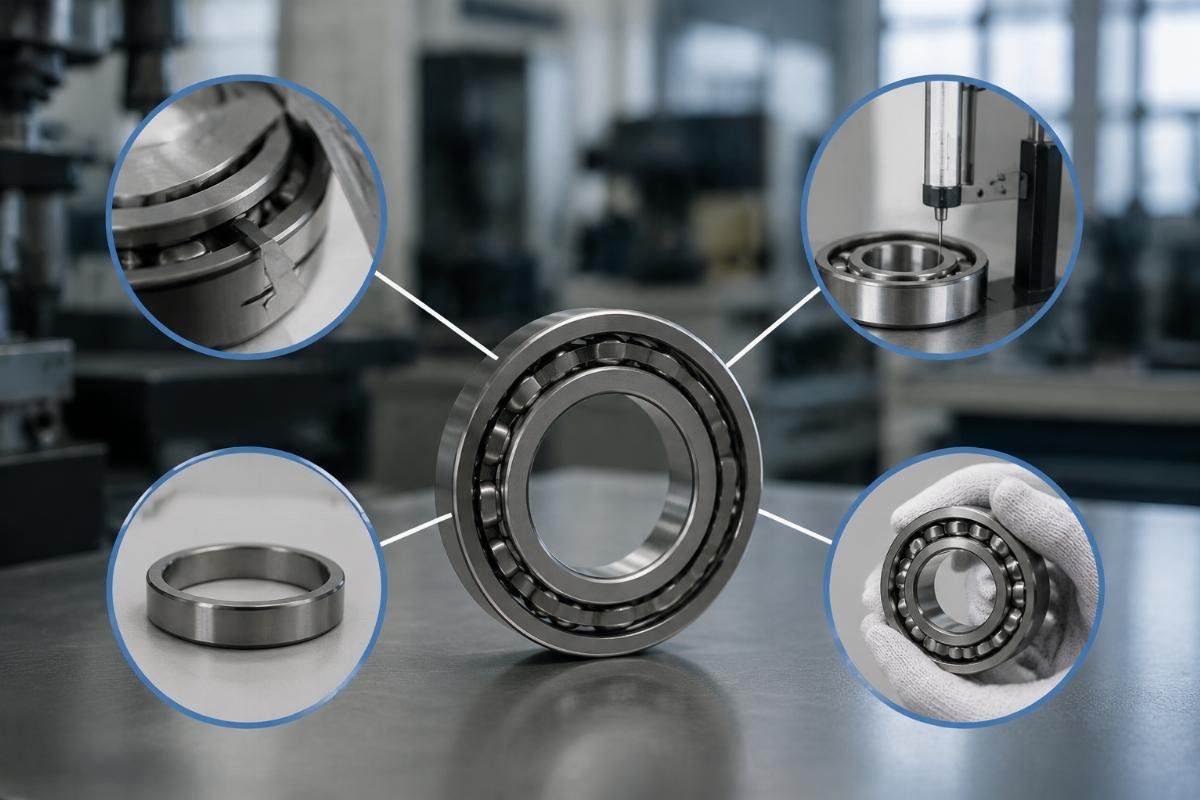
When I receive a request structured this way, I can pull the relevant clearance tables from each brand’s current catalogue, match the micrometer bands, and confirm the cross-reference before the order is placed. This is the service model I operate on: authenticity verification, authorized-source sourcing, and complete cross-reference support across all six major brands. Every bearing that leaves our warehouse is checked against the original specification, and if there is any band mismatch, the buyer is notified before shipment.
A distributor in Central Asia recently sent me an inquiry for a mixed order of deep groove ball and spherical roller bearings, with some codes in NTN suffixes and others in SKF. I returned a full cross-reference sheet showing the matched codes and the micrometer band overlap for each size. They confirmed the order the next morning and have since moved their entire bearing procurement to a single-source model with verified cross-referencing.
Conclusion
Cross-brand bearing replacement is a micrometer exercise, not a letter-matching exercise. SKF and NTN both publish rigorous clearance standards, but their C3 bands do not fully coincide, and NTN’s CM code has no SKF equivalent. The only safe path is to pull the original OEM drawing, confirm the exact micrometer band for the specific bore size, and verify the cross-reference with a supplier who checks both brands’ current catalogues before shipping. Get that right, and the bearing will run as designed. Get it wrong, and the cost shows up in heat, vibration, and unplanned downtime.
Tags
Leave a Reply