
Technical Resources

SKF vs NTN Bearing Precision Class Comparison – Wholesale Supplier

12 min read
SKF vs NTN Bearing Precision Class Comparison – Wholesale Supplier

SKF vs NTN Bearing Precision Class Comparison – Wholesale Supplier

Same ISO class label does not mean same tolerance band across brands.

SKF and NTN both follow ISO 492 for radial bearing tolerance classes (P0, P6, P5, P4, P2), yet the actual tolerance zones and radial clearance ranges within each class differ between the two manufacturers. A P6 deep groove ball bearing from SKF is not a guaranteed drop-in replacement for a P6 NTN of the same bore size — the permissible deviation on bore diameter, outer diameter, width, and radial runout can shift enough to affect vibration, fit, and thermal behavior in precision applications. Safe SKF vs NTN bearing precision class interchange requires side-by-side verification of tolerance tables and clearance group alignment before ordering. [NEED_CITE: ISO 492 defines general tolerance classes for radial bearings but allows manufacturer-specific sub-band allocation within each class]

I remember walking the floor at Hannover Messe years ago, standing in front of a European buyer who had just received a shipment of NTN 6206 bearings in P6 class to replace SKF units on his spindle line. He pulled me aside and asked why the vibration readings had drifted after the swap. I came from a quality inspection background before moving into sourcing, so tolerance bands were something I paid attention to — but at that moment, I had told him the two brands’ P6 ratings were "close enough." They weren’t. The radial clearance distribution at P6 level between SKF and NTN sits in slightly different zones, and on a high-speed spindle running continuously, that small shift was enough to push vibration amplitude outside his machine’s acceptable window. He assumed I had shipped him lower-precision stock. That conversation changed how I handle every SKF vs NTN bearing precision class cross-reference request to this day.
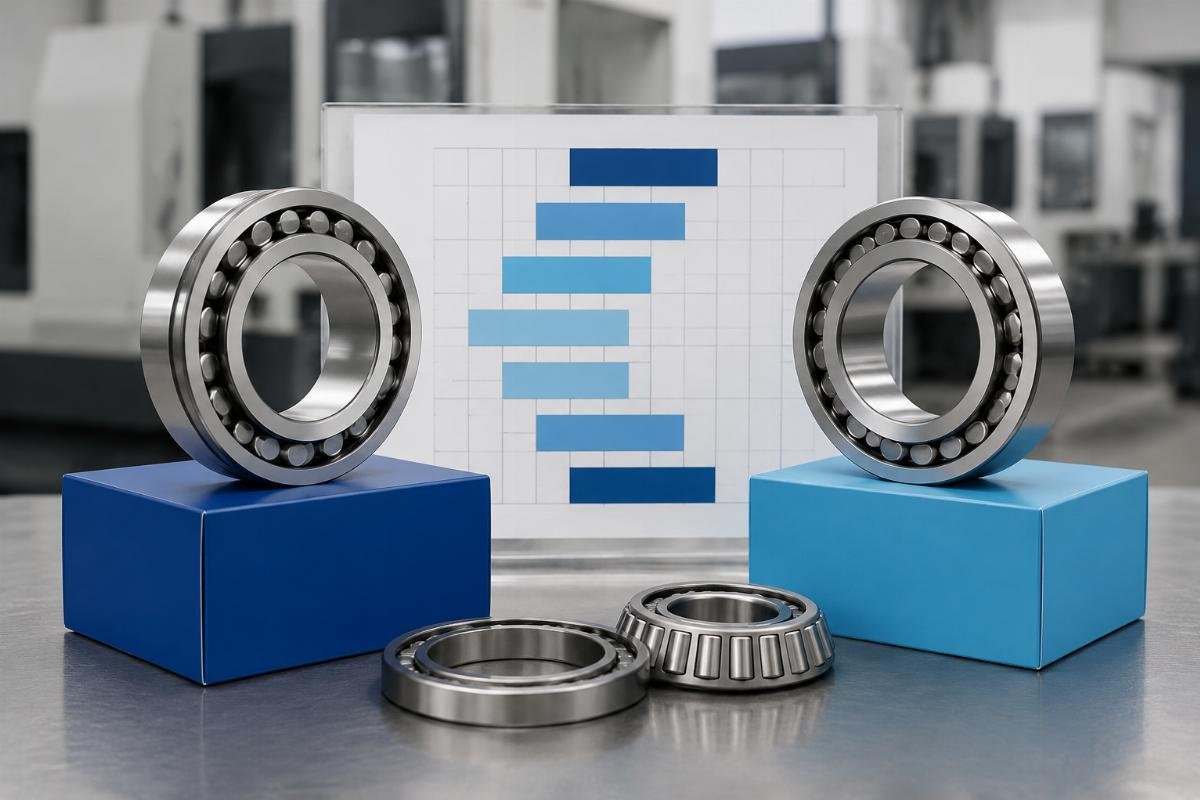
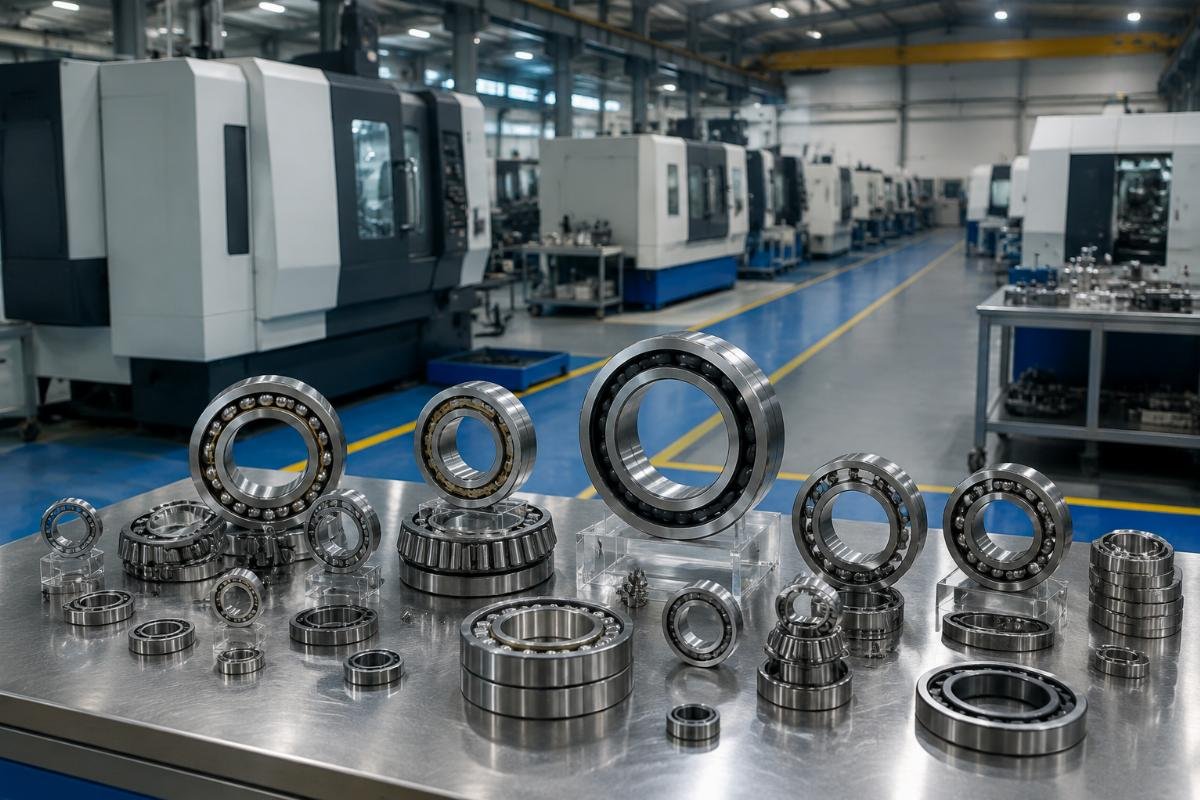
SKF and NTN bearing precision class tolerance band comparison chart showing ISO P0 to P2 classes

Let me walk you through what actually differs, how to verify it step by step, and where blind substitution tends to fail.

What Do SKF and NTN Precision Classes Actually Measure?

Both manufacturers align their class naming to ISO 492, but the published tolerance tables for each class are not identical between SKF and NTN. [NEED_CITE: ISO 492 specifies tolerance classes P0, P6, P6X, P5, P4, P2 for radial bearings with defined upper and lower limits for bore, OD, width, and radial runout]

The ISO standard defines the outer boundaries of each class — meaning a bearing labeled P6 from any manufacturer must fall within the ISO-defined tolerance zone for P6. However, each manufacturer sets its own internal production target within that zone. SKF typically centers its production targets toward the middle of the ISO P6 band, while NTN may position its targets differently based on its own process capability data. The result: two bearings both carrying a P6 stamp can have measurably different actual dimensions when you put them on a coordinate measuring machine.

This matters most in three areas:

  • Bore and OD tolerance: The permissible deviation range at P5 and P4 is narrow enough that a shift of a few microns between brands can change the fit class from light press to slip fit on a shaft.
  • Radial runout: At P4 and above, the inner ring radial runout tolerance becomes critical for spindle applications. SKF and NTN define slightly different maximum values within the ISO envelope.
  • Width tolerance: Less discussed but relevant for paired mounting — a width difference between brands in a duplex pair can affect preload distribution.
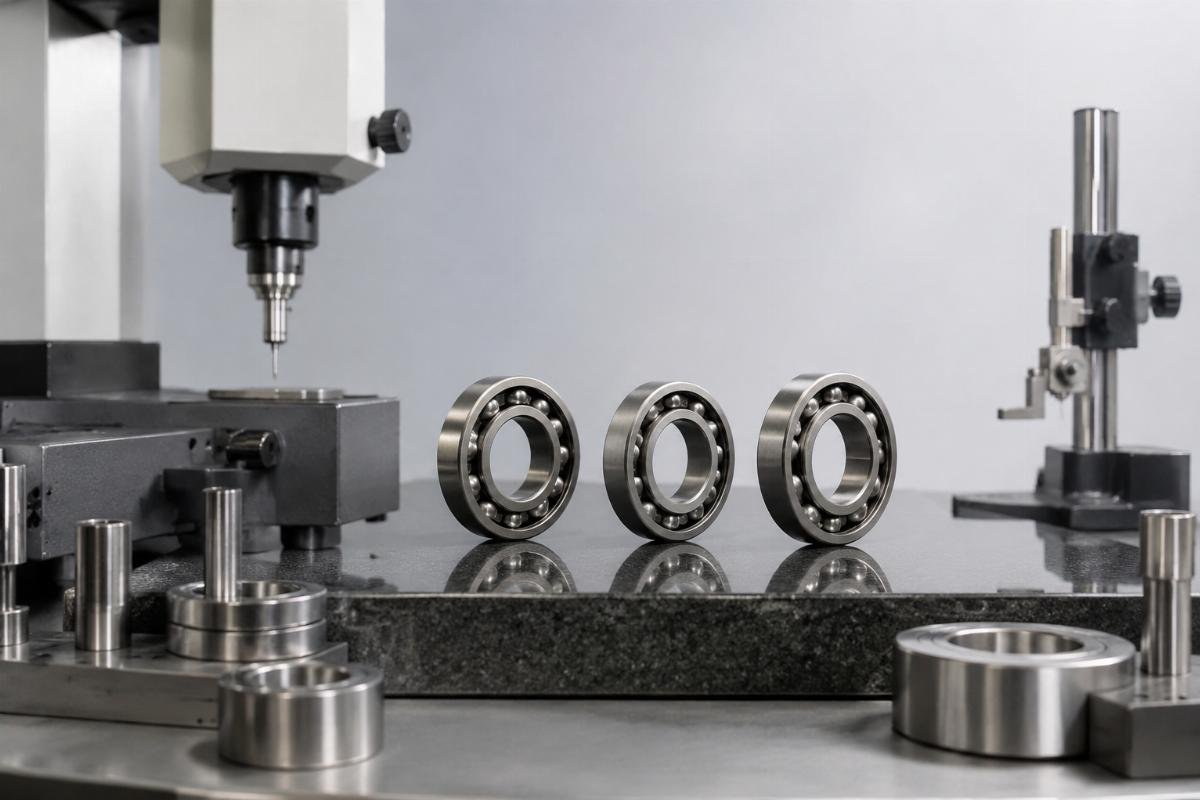
ISO precision class tolerance zone diagram for radial ball bearings P0 through P2

The key takeaway for anyone doing SKF vs NTN bearing precision class interchange: the class label tells you the boundary, not the actual production center. You need the manufacturer’s specific tolerance table to see where each brand sits within that boundary. [NEED_CITE: Manufacturer tolerance tables show production target distributions within ISO class boundaries]

Step-by-Step: How to Cross-Reference Precision Between SKF and NTN

A reliable SKF vs NTN bearing precision class cross-reference follows a structured verification sequence — never rely on class label matching alone.

Here is the process I use when a buyer asks me to substitute one brand for the other at a specific precision class:

Step 1 — Pull both manufacturers’ tolerance tables for the target class and bearing type.
Each brand publishes detailed tolerance data in its technical catalog. For deep groove ball bearings, you need the tables covering bore diameter tolerance, outer diameter tolerance, width tolerance, and radial runout of inner and outer rings. These tables are organized by ISO class (P0, P6, P5, P4, P2) and by bearing size series. [NEED_CITE: SKF and NTN publish bearing tolerance tables in their product catalogs organized by ISO class and size series]

Step 2 — Compare the tolerance bands side by side for each parameter.
Lay the SKF table and NTN table next to each other. For each parameter — bore, OD, width, inner ring runout, outer ring runout — check whether the tolerance values match at the same class. In many cases at P6 level, the differences are small but present. At P5 and P4, the gaps widen.

Step 3 — Verify radial clearance group alignment.
Precision class and radial clearance are separate specifications. A bearing can be P6 class with C3 clearance, or P5 class with CN (normal) clearance. Both SKF and NTN use the same clearance group designations (C2, CN, C3, C4, C5) per ISO 5753, but the actual clearance range within each group can vary slightly between manufacturers. [NEED_CITE: ISO 5753 defines radial clearance groups for radial bearings]

If your application specifies P6/C3, you must confirm that both the precision class and the clearance group match — not just one of them. A P6 bearing with C4 clearance instead of C3 will behave differently under thermal expansion, especially in motor or pump applications.

Step 4 — Confirm cage type and material compatibility.
Cage design affects high-speed performance and lubricant compatibility. SKF and NTN offer different cage materials and designs for the same bearing model — steel cage, polyamide cage, brass cage — and the choice influences maximum operating speed and noise characteristics. When doing SKF vs NTN bearing precision class interchange, verify that the cage specification meets your application’s speed and temperature requirements.

Step 5 — Document the comparison and get buyer sign-off.
Before placing the order, I prepare a one-page comparison sheet showing the key parameters from both brands’ tables, side by side, with any differences highlighted. The buyer reviews and confirms acceptance. This step alone has prevented multiple field complaints in my experience.
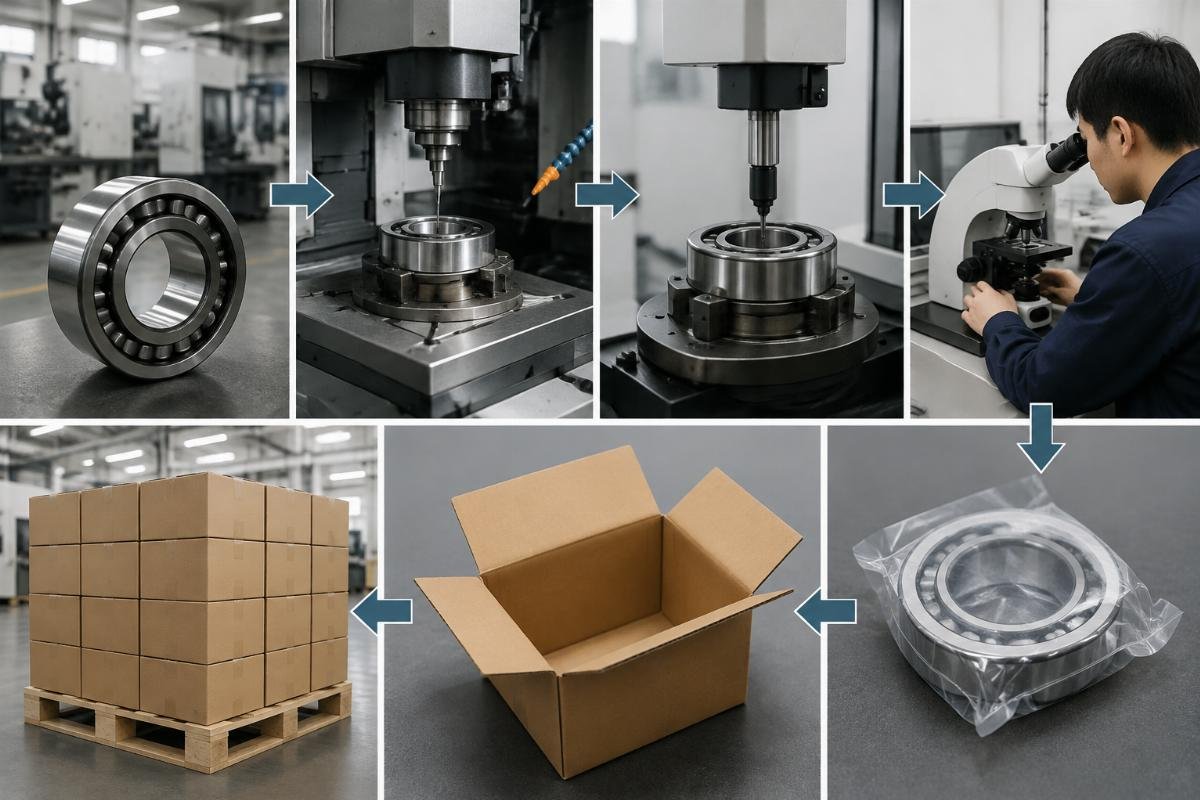
Step-by-step bearing precision class cross-reference workflow diagram

A European distributor once asked me to supply NTN P5 angular contact bearings to replace an SKF order that was backordered. I ran through the comparison and found that at P5 level, the inner ring radial runout tolerance for the specific size requested was tighter on the NTN table than on the SKF table — meaning the NTN units would actually be closer to the center of the ISO P5 band. I flagged this to the buyer, who confirmed it was acceptable for his spindle application. The swap went smoothly because we verified before shipping, not after installation.

Where Blind Substitution Goes Wrong

The majority of field complaints I have seen from cross-brand bearing swaps trace back to skipped verification at the precision class or clearance level.

Let me share three scenarios that illustrate common failure patterns.

Scenario 1 — High-speed spindle vibration drift.
A Middle East machine tool operator replaced his SKF P6 deep groove ball bearings with NTN P6 equivalents on a grinding spindle without checking the tolerance tables. After installation, the spindle vibration amplitude increased noticeably. The bearings were genuine NTN, genuinely P6 class — but the actual radial runout values from NTN’s P6 production range sat at a different point within the ISO band compared to what the SKF units had delivered. On a spindle running at extended speeds, even a small shift in runout translates to measurable vibration change. The operator spent significant time and cost troubleshooting before realizing the issue was not bearing quality but tolerance band positioning. [NEED_CITE: Spindle vibration sensitivity to bearing radial runout variation at high rotational speeds]

Scenario 2 — Motor rebuild thermal issue from clearance mismatch.
An industrial maintenance team in South America was rebuilding a batch of electric motors. The original specification called for P6/C3 deep groove ball bearings from SKF. Due to supply constraints, they sourced NTN P6 bearings — but the clearance group shipped was CN instead of C3. The tighter CN clearance, combined with the motor’s operating temperature profile, caused the bearings to run hotter than designed. Temperature rise was noticeably higher than baseline measurements from previous rebuilds. The root cause was not the precision class but the radial clearance mismatch — a parameter that sits alongside precision class in the specification but is often overlooked during cross-brand substitution.

Scenario 3 — Distributor mixed-stock complaint.
A trading company in Southeast Asia consolidated inventory from multiple sources and shipped "equivalent" bearings to a customer — same model number, same precision class label, but mixed brands. The customer received a batch where some positions had SKF and others had NTN. When installed in a paired arrangement on a conveyor drive, the mixed-brand set produced uneven load distribution and premature noise complaints. The precision classes were nominally identical, but the actual dimensional differences between the two brands’ production batches created a mismatch in the paired mounting. The distributor had to replace the entire set at its own cost.
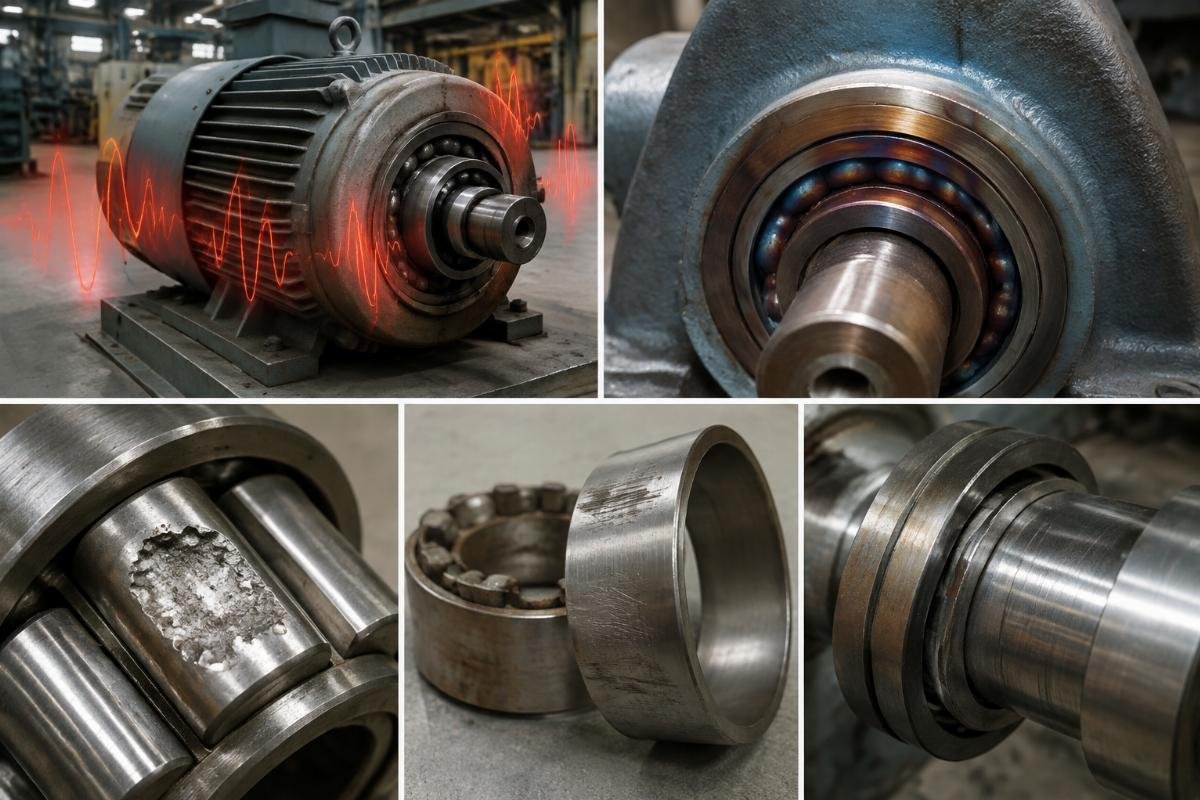
Bearing application failure scenarios showing vibration thermal and fit issues from precision class mismatch

In each case, the SKF vs NTN bearing precision class comparison was either not performed or not performed at the clearance level. The bearings were genuine, correctly labeled, and within ISO tolerance — but the real-world application demanded more than label-level matching.

Pre-Order Verification Checklist

Before finalizing any SKF vs NTN bearing precision class interchange, confirm the following data points in writing.

This checklist comes from years of handling cross-reference requests and learning which parameters cause problems when overlooked:

  • Tolerance table comparison: Obtain the tolerance data for the specific bearing type, size, and precision class from both SKF and NTN catalogs. Compare bore, OD, width, inner ring runout, and outer ring runout values. Note any differences. [NEED_CITE: SKF and NTN technical catalogs contain bearing tolerance tables by ISO class]
  • Radial clearance group: Confirm the clearance group (C2, CN, C3, C4, C5) matches between the original specification and the substitute bearing. Do not assume that same model number means same clearance.
  • Cage type and material: Verify the cage design (steel, polyamide, brass, machined, stamped) matches the application’s speed, temperature, and lubrication requirements.
  • Internal design suffixes: Check whether the bearing model includes internal design variations (contact angle, raceway profile, seal type) that may differ between brands even for the same basic model number.
  • Country of origin and packaging: For buyers concerned with authenticity, confirm the country of origin and verify packaging markings against each manufacturer’s anti-counterfeit guidelines. [NEED_CITE: SKF and NTN publish anti-counterfeit identification guides for their products]
  • Application criticality assessment: Determine whether the application can tolerate the tolerance band shift between brands. High-speed spindles, precision gearboxes, and servo motor shafts are less forgiving than general conveyor or fan applications.

Pre-order bearing cross-reference verification checklist for SKF and NTN precision class interchange

I provide this verification as part of the cross-reference interchange service I offer buyers. When you request a brand substitution — whether from SKF to NTN, NSK to FAG, or any combination across the six major brands I source from — the comparison sheet is prepared before the order is confirmed, not after the goods arrive. Technical selection guidance is included to help you assess whether the substitution is appropriate for your specific application conditions.

When to Stick with One Brand vs. Accept Cross-Reference

Not every application can accept a cross-brand precision class swap — knowing when to refuse substitution is as important as knowing how to verify it.

Based on my experience handling SKF vs NTN bearing precision class interchange requests across multiple industries, here is how I categorize application criticality:

Accept cross-reference with verified comparison:

  • General industrial motors and pumps operating at moderate speeds
  • Conveyor systems and material handling equipment
  • Agricultural machinery and non-critical drive arrangements
  • Applications where the original bearing was specified at P0 or P6 class with standard clearance

Require single-brand continuity or engineering approval:

  • Machine tool spindles running at high speeds with P4 or P2 class requirements
  • Servo motor shafts where vibration and noise specifications are tight
  • paired or duplex mounted bearing arrangements where dimensional consistency between positions is critical
  • Applications where the original bearing was specified at P5 class or above with specific clearance groups (C2, C3)

The distinction is not about brand quality — both SKF and NTN produce excellent bearings within their stated classes. The distinction is about whether your application can absorb the small but real dimensional differences that exist between two manufacturers’ production ranges at the same ISO class.
Decision flowchart for bearing brand substitution based on application criticality and precision requirements

For buyers sourcing through wholesale channels, the practical approach is to treat SKF vs NTN bearing precision class interchange as a technical decision, not just a commercial one. The price difference between brands may be meaningful for your procurement budget, but the cost of a field failure from an unverified substitution will always exceed the savings.

Conclusion

Precision class labels are necessary but insufficient for cross-brand bearing interchange. SKF and NTN both manufacture to ISO 492 tolerance classes, but their actual production targets within each class differ. Safe SKF vs NTN bearing precision class substitution requires comparing tolerance tables, verifying clearance groups, confirming cage specifications, and assessing application criticality — before the order is placed. Label matching is a starting point, not a finish line.

About the Author

author
author

Editor covering global sourcing, supplier verification, and industrial product knowledge. Content is compiled from manufacturer specifications, industry standards, and hands-on experience with international B2B buyers. Every article is fact-checked before publishing to help procurement professionals make informed decisions.

View all posts

Leave a Reply

Your email address will not be published. Required fields are marked *

Youchi Bearings

Ready to Source SKF & NTN Bearings?

1,100+ clients across 50+ countries trust our dual-brand supply chain. Get your tailored quote within 24 hours.

ISO 9001 SKF AUTH. NTN AUTH.

SKF vs NTN Bearing Precision Class Comparison – Wholesale Supplier

author author 12 min read
SKF and NTN bearing precision class tolerance band comparison chart showing ISO P0 to P2 classes

SKF vs NTN Bearing Precision Class Comparison – Wholesale Supplier

Same ISO class label does not mean same tolerance band across brands.

SKF and NTN both follow ISO 492 for radial bearing tolerance classes (P0, P6, P5, P4, P2), yet the actual tolerance zones and radial clearance ranges within each class differ between the two manufacturers. A P6 deep groove ball bearing from SKF is not a guaranteed drop-in replacement for a P6 NTN of the same bore size — the permissible deviation on bore diameter, outer diameter, width, and radial runout can shift enough to affect vibration, fit, and thermal behavior in precision applications. Safe SKF vs NTN bearing precision class interchange requires side-by-side verification of tolerance tables and clearance group alignment before ordering. [NEED_CITE: ISO 492 defines general tolerance classes for radial bearings but allows manufacturer-specific sub-band allocation within each class]

I remember walking the floor at Hannover Messe years ago, standing in front of a European buyer who had just received a shipment of NTN 6206 bearings in P6 class to replace SKF units on his spindle line. He pulled me aside and asked why the vibration readings had drifted after the swap. I came from a quality inspection background before moving into sourcing, so tolerance bands were something I paid attention to — but at that moment, I had told him the two brands’ P6 ratings were "close enough." They weren’t. The radial clearance distribution at P6 level between SKF and NTN sits in slightly different zones, and on a high-speed spindle running continuously, that small shift was enough to push vibration amplitude outside his machine’s acceptable window. He assumed I had shipped him lower-precision stock. That conversation changed how I handle every SKF vs NTN bearing precision class cross-reference request to this day.

SKF and NTN bearing precision class tolerance band comparison chart showing ISO P0 to P2 classes

Let me walk you through what actually differs, how to verify it step by step, and where blind substitution tends to fail.

What Do SKF and NTN Precision Classes Actually Measure?

Both manufacturers align their class naming to ISO 492, but the published tolerance tables for each class are not identical between SKF and NTN. [NEED_CITE: ISO 492 specifies tolerance classes P0, P6, P6X, P5, P4, P2 for radial bearings with defined upper and lower limits for bore, OD, width, and radial runout]

The ISO standard defines the outer boundaries of each class — meaning a bearing labeled P6 from any manufacturer must fall within the ISO-defined tolerance zone for P6. However, each manufacturer sets its own internal production target within that zone. SKF typically centers its production targets toward the middle of the ISO P6 band, while NTN may position its targets differently based on its own process capability data. The result: two bearings both carrying a P6 stamp can have measurably different actual dimensions when you put them on a coordinate measuring machine.

This matters most in three areas:

  • Bore and OD tolerance: The permissible deviation range at P5 and P4 is narrow enough that a shift of a few microns between brands can change the fit class from light press to slip fit on a shaft.
  • Radial runout: At P4 and above, the inner ring radial runout tolerance becomes critical for spindle applications. SKF and NTN define slightly different maximum values within the ISO envelope.
  • Width tolerance: Less discussed but relevant for paired mounting — a width difference between brands in a duplex pair can affect preload distribution.

ISO precision class tolerance zone diagram for radial ball bearings P0 through P2

The key takeaway for anyone doing SKF vs NTN bearing precision class interchange: the class label tells you the boundary, not the actual production center. You need the manufacturer’s specific tolerance table to see where each brand sits within that boundary. [NEED_CITE: Manufacturer tolerance tables show production target distributions within ISO class boundaries]

Step-by-Step: How to Cross-Reference Precision Between SKF and NTN

A reliable SKF vs NTN bearing precision class cross-reference follows a structured verification sequence — never rely on class label matching alone.

Here is the process I use when a buyer asks me to substitute one brand for the other at a specific precision class:

Step 1 — Pull both manufacturers’ tolerance tables for the target class and bearing type.
Each brand publishes detailed tolerance data in its technical catalog. For deep groove ball bearings, you need the tables covering bore diameter tolerance, outer diameter tolerance, width tolerance, and radial runout of inner and outer rings. These tables are organized by ISO class (P0, P6, P5, P4, P2) and by bearing size series. [NEED_CITE: SKF and NTN publish bearing tolerance tables in their product catalogs organized by ISO class and size series]

Step 2 — Compare the tolerance bands side by side for each parameter.
Lay the SKF table and NTN table next to each other. For each parameter — bore, OD, width, inner ring runout, outer ring runout — check whether the tolerance values match at the same class. In many cases at P6 level, the differences are small but present. At P5 and P4, the gaps widen.

Step 3 — Verify radial clearance group alignment.
Precision class and radial clearance are separate specifications. A bearing can be P6 class with C3 clearance, or P5 class with CN (normal) clearance. Both SKF and NTN use the same clearance group designations (C2, CN, C3, C4, C5) per ISO 5753, but the actual clearance range within each group can vary slightly between manufacturers. [NEED_CITE: ISO 5753 defines radial clearance groups for radial bearings]

If your application specifies P6/C3, you must confirm that both the precision class and the clearance group match — not just one of them. A P6 bearing with C4 clearance instead of C3 will behave differently under thermal expansion, especially in motor or pump applications.

Step 4 — Confirm cage type and material compatibility.
Cage design affects high-speed performance and lubricant compatibility. SKF and NTN offer different cage materials and designs for the same bearing model — steel cage, polyamide cage, brass cage — and the choice influences maximum operating speed and noise characteristics. When doing SKF vs NTN bearing precision class interchange, verify that the cage specification meets your application’s speed and temperature requirements.

Step 5 — Document the comparison and get buyer sign-off.
Before placing the order, I prepare a one-page comparison sheet showing the key parameters from both brands’ tables, side by side, with any differences highlighted. The buyer reviews and confirms acceptance. This step alone has prevented multiple field complaints in my experience.

Step-by-step bearing precision class cross-reference workflow diagram

A European distributor once asked me to supply NTN P5 angular contact bearings to replace an SKF order that was backordered. I ran through the comparison and found that at P5 level, the inner ring radial runout tolerance for the specific size requested was tighter on the NTN table than on the SKF table — meaning the NTN units would actually be closer to the center of the ISO P5 band. I flagged this to the buyer, who confirmed it was acceptable for his spindle application. The swap went smoothly because we verified before shipping, not after installation.

Where Blind Substitution Goes Wrong

The majority of field complaints I have seen from cross-brand bearing swaps trace back to skipped verification at the precision class or clearance level.

Let me share three scenarios that illustrate common failure patterns.

Scenario 1 — High-speed spindle vibration drift.
A Middle East machine tool operator replaced his SKF P6 deep groove ball bearings with NTN P6 equivalents on a grinding spindle without checking the tolerance tables. After installation, the spindle vibration amplitude increased noticeably. The bearings were genuine NTN, genuinely P6 class — but the actual radial runout values from NTN’s P6 production range sat at a different point within the ISO band compared to what the SKF units had delivered. On a spindle running at extended speeds, even a small shift in runout translates to measurable vibration change. The operator spent significant time and cost troubleshooting before realizing the issue was not bearing quality but tolerance band positioning. [NEED_CITE: Spindle vibration sensitivity to bearing radial runout variation at high rotational speeds]

Scenario 2 — Motor rebuild thermal issue from clearance mismatch.
An industrial maintenance team in South America was rebuilding a batch of electric motors. The original specification called for P6/C3 deep groove ball bearings from SKF. Due to supply constraints, they sourced NTN P6 bearings — but the clearance group shipped was CN instead of C3. The tighter CN clearance, combined with the motor’s operating temperature profile, caused the bearings to run hotter than designed. Temperature rise was noticeably higher than baseline measurements from previous rebuilds. The root cause was not the precision class but the radial clearance mismatch — a parameter that sits alongside precision class in the specification but is often overlooked during cross-brand substitution.

Scenario 3 — Distributor mixed-stock complaint.
A trading company in Southeast Asia consolidated inventory from multiple sources and shipped "equivalent" bearings to a customer — same model number, same precision class label, but mixed brands. The customer received a batch where some positions had SKF and others had NTN. When installed in a paired arrangement on a conveyor drive, the mixed-brand set produced uneven load distribution and premature noise complaints. The precision classes were nominally identical, but the actual dimensional differences between the two brands’ production batches created a mismatch in the paired mounting. The distributor had to replace the entire set at its own cost.

Bearing application failure scenarios showing vibration thermal and fit issues from precision class mismatch

In each case, the SKF vs NTN bearing precision class comparison was either not performed or not performed at the clearance level. The bearings were genuine, correctly labeled, and within ISO tolerance — but the real-world application demanded more than label-level matching.

Pre-Order Verification Checklist

Before finalizing any SKF vs NTN bearing precision class interchange, confirm the following data points in writing.

This checklist comes from years of handling cross-reference requests and learning which parameters cause problems when overlooked:

  • Tolerance table comparison: Obtain the tolerance data for the specific bearing type, size, and precision class from both SKF and NTN catalogs. Compare bore, OD, width, inner ring runout, and outer ring runout values. Note any differences. [NEED_CITE: SKF and NTN technical catalogs contain bearing tolerance tables by ISO class]
  • Radial clearance group: Confirm the clearance group (C2, CN, C3, C4, C5) matches between the original specification and the substitute bearing. Do not assume that same model number means same clearance.
  • Cage type and material: Verify the cage design (steel, polyamide, brass, machined, stamped) matches the application’s speed, temperature, and lubrication requirements.
  • Internal design suffixes: Check whether the bearing model includes internal design variations (contact angle, raceway profile, seal type) that may differ between brands even for the same basic model number.
  • Country of origin and packaging: For buyers concerned with authenticity, confirm the country of origin and verify packaging markings against each manufacturer’s anti-counterfeit guidelines. [NEED_CITE: SKF and NTN publish anti-counterfeit identification guides for their products]
  • Application criticality assessment: Determine whether the application can tolerate the tolerance band shift between brands. High-speed spindles, precision gearboxes, and servo motor shafts are less forgiving than general conveyor or fan applications.

Pre-order bearing cross-reference verification checklist for SKF and NTN precision class interchange

I provide this verification as part of the cross-reference interchange service I offer buyers. When you request a brand substitution — whether from SKF to NTN, NSK to FAG, or any combination across the six major brands I source from — the comparison sheet is prepared before the order is confirmed, not after the goods arrive. Technical selection guidance is included to help you assess whether the substitution is appropriate for your specific application conditions.

When to Stick with One Brand vs. Accept Cross-Reference

Not every application can accept a cross-brand precision class swap — knowing when to refuse substitution is as important as knowing how to verify it.

Based on my experience handling SKF vs NTN bearing precision class interchange requests across multiple industries, here is how I categorize application criticality:

Accept cross-reference with verified comparison:

  • General industrial motors and pumps operating at moderate speeds
  • Conveyor systems and material handling equipment
  • Agricultural machinery and non-critical drive arrangements
  • Applications where the original bearing was specified at P0 or P6 class with standard clearance

Require single-brand continuity or engineering approval:

  • Machine tool spindles running at high speeds with P4 or P2 class requirements
  • Servo motor shafts where vibration and noise specifications are tight
  • paired or duplex mounted bearing arrangements where dimensional consistency between positions is critical
  • Applications where the original bearing was specified at P5 class or above with specific clearance groups (C2, C3)

The distinction is not about brand quality — both SKF and NTN produce excellent bearings within their stated classes. The distinction is about whether your application can absorb the small but real dimensional differences that exist between two manufacturers’ production ranges at the same ISO class.

Decision flowchart for bearing brand substitution based on application criticality and precision requirements

For buyers sourcing through wholesale channels, the practical approach is to treat SKF vs NTN bearing precision class interchange as a technical decision, not just a commercial one. The price difference between brands may be meaningful for your procurement budget, but the cost of a field failure from an unverified substitution will always exceed the savings.

Conclusion

Precision class labels are necessary but insufficient for cross-brand bearing interchange. SKF and NTN both manufacture to ISO 492 tolerance classes, but their actual production targets within each class differ. Safe SKF vs NTN bearing precision class substitution requires comparing tolerance tables, verifying clearance groups, confirming cage specifications, and assessing application criticality — before the order is placed. Label matching is a starting point, not a finish line.

Leave a Reply

Your email address will not be published. Required fields are marked *

Keep Reading